

Introduction
The transition towards more sustainable mobility in Spain is closely linked to the development of a robust and efficient network of charging points for electric vehicles. As the adoption of these vehicles grows, the charging infrastructure becomes a critical element in promoting their use and ensuring that users can travel without setbacks. In this article, we explore the current state of this infrastructure in Spain, highlighting its progress and areas for improvement.
Distribution and Number of Charging Points
At the beginning of 2024, Spain had a total of 41,067 charging points installed. However, only 32,422 of these are operational, as approximately 8,645 points are out of service due to technical problems or lack of connection to the electricity grid (La Vanguardia) (Economía 3). This data reveals the urgent need to improve not only the quantity, but also the quality and maintenance of these charging points.
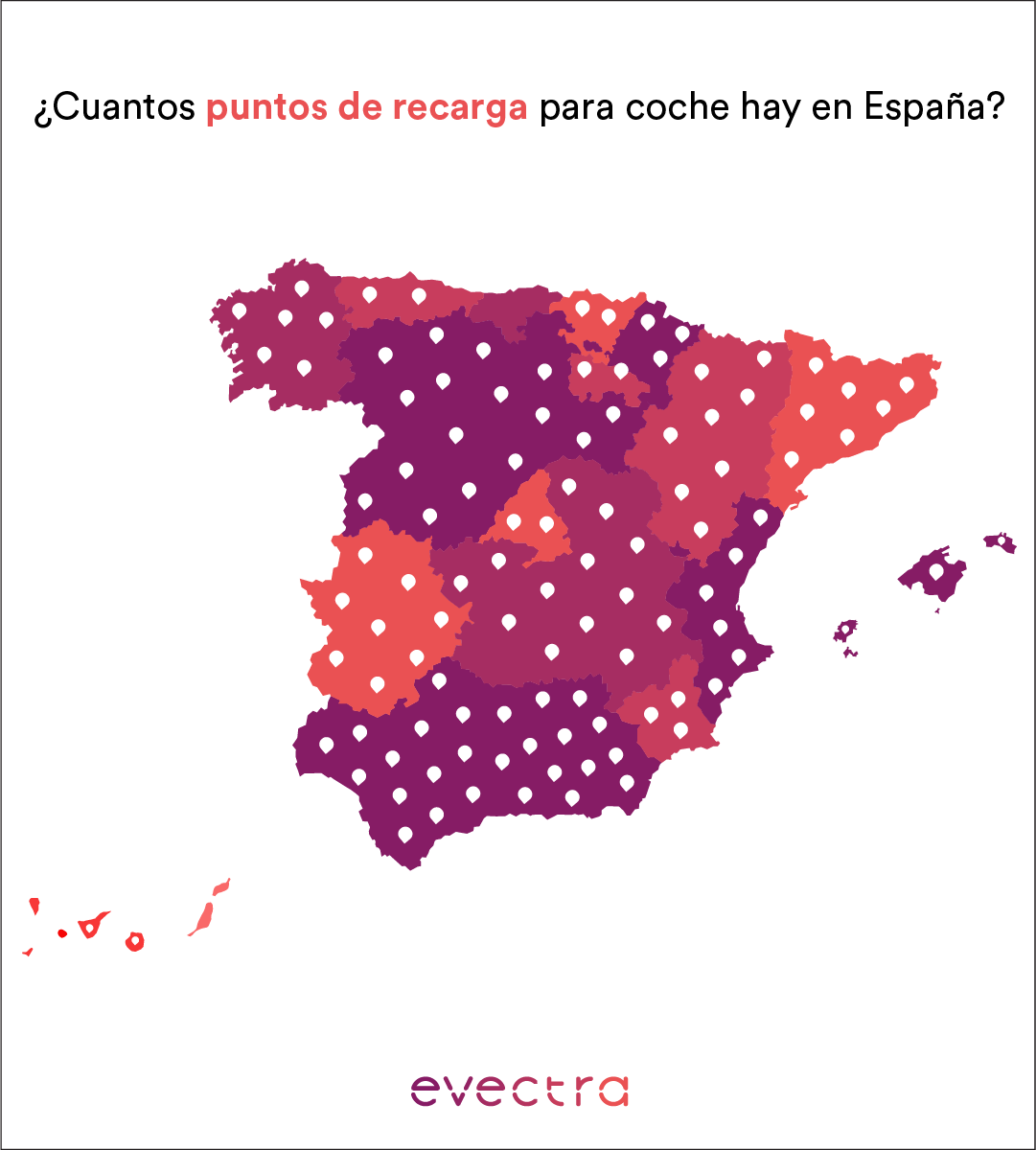
The geographical distribution of charging points is uneven. Catalonia leads with more than 26% of the total number of points, followed by the Valencian Community and the Community of Madrid, each with approximately 12% of the total. Andalusia also has a significant presence with almost 10% of the country’s charging points (Cinco Días). In contrast, regions such as La Rioja, Cantabria and Extremadura have the lowest number of points, with 69, 150 and 206 stations respectively (La Vanguardia). In contrast, only a small proportion of charging points, located mainly in Madrid and Catalonia, are high-power, with more than 250 kW, allowing for much faster and more efficient charging (Cinco Días).
Challenges and Proposals for Improvement
Despite progress, Spain lags behind other European countries in terms of charging point density per inhabitant. Currently, Spain has 245 charging points per million inhabitants, a figure that contrasts sharply with the European average of 573. To close this gap, it is crucial to implement measures that facilitate and accelerate the installation of new charging points.
Automotive industry associations, such as Anfac and Faconauto, have highlighted the need for greater investment and a more proactive policy on the part of the government. By 2025, it is estimated that 120,000 charging points will be needed, and by 2030, the figure is expected to reach 340,000 (El Motor). Among the proposals are the simplification of administrative procedures for the installation of charging points and the improvement of incentives for their development.
Conclusion
The current state of charging infrastructure in Spain shows both significant progress and important challenges to overcome. The concentration of charging points in certain regions and the predominance of slow charging stations underscore the need for a more balanced and efficient expansion of the network. With strategic planning and adequate support, Spain can improve its charging infrastructure and move towards more sustainable and accessible mobility for all.
To achieve this, collaboration between the government, the private sector and consumers will be essential, ensuring that the charging infrastructure is developed in line with the growing fleet of electric vehicles and the demands of decarbonising mobility.
At EVECTRA, we support the expansion of charging infrastructure in Spain by offering innovative and sustainable solutions that not only facilitate electric mobility, but also promote a greener future. Find out more about our projects and services.


